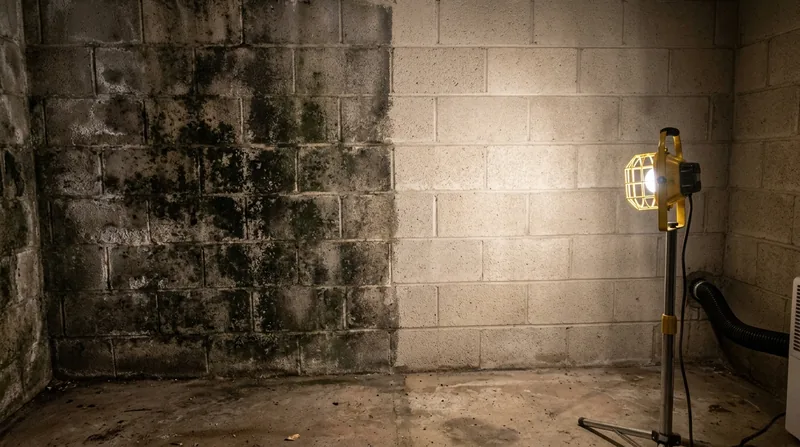




Lexington sits on thin phosphatic clay over limestone, and that geology decides where water goes. In older neighborhoods like Woodland Park, Aylesford and downtown, 1880s to 1920s brick and frame homes sit on stone or brick foundations with shallow cellars, so any seepage stays trapped against the masonry. In Ashland Park, Chevy Chase and Kenwick, 1920s to 1950s brick Tudors and cottages have full basements that take on water during heavy spring rain. Across Meadowthorpe, Lansdowne and Beaumont, 1950s to 1970s ranches and split-levels often have partly finished basements where a musty smell shows up before any visible growth does. Basement Mold Remediation in Lexington means removing the affected material and fixing the moisture source behind it, not just wiping the walls. We inspect the foundation, the drain tile and the sump before we quote any treatment, because growth returns the moment the water does. Start with a free basement inspection so the source is identified before any work begins.
Why Basement Mold Remediation Matters in Lexington's Older and Newer Basements
Lexington's spring rain and freeze-thaw winters push water against foundation walls from both sides. In older brick and stone foundations, mortar joints wick moisture and efflorescence appears as a white powder on the wall. In newer poured-concrete walkouts in Hamburg, Nicholasville and Georgetown, hydrostatic pressure finds the cold joints and tie holes first. Mold needs moisture and a food source, and a damp basement rim joist or drywall face is both.
- We trace the moisture source before treatment, because growth on a wall usually starts at a footing drain or a failed downspout extension.
- We contain the work area with plastic sheeting and negative air pressure so spores do not spread to the finished rooms upstairs.
- We remove porous materials that cannot be cleaned, including drywall, insulation and wood framing that has lost its structure.
- We treat structural surfaces with an antimicrobial and then dry the space with dehumidification sized to the cubic footage.
- We correct the water path with drainage, sealing or a sump upgrade so the same wall does not stay wet after the next storm.
Remediation without moisture control is a temporary fix, and we say so plainly when a homeowner asks us to just treat the visible growth.
Key info: A 1950s ranch in Lansdowne showed growth along the base of a finished wall every June. The cause was a clogged footing drain and a downspout that dumped at the corner. Treating the wall alone would have brought it back within one wet season. See the drain tile repair page for how that path gets corrected.
For the official line on mold and moisture in buildings, the U.S. Environmental Protection Agency publishes guidance at epa.gov/mold, and it is worth reading before you approve any scope of work.
How We Run Basement Mold Remediation in Lexington, Step by Step
Every job starts with a musty smell diagnostic, because odor often shows up in a finished basement before any stain is visible. We map the moisture with a pin meter and a thermal camera, check the sump basin and discharge line, and look at grading and downspout extensions on the outside. Then we build a scope that pairs the remediation with the drainage correction that keeps the space dry. No two Lexington basements get the same plan, and we tell you when the growth is minor enough that cleaning and drying are all that is needed.
- We inspect the basement, foundation walls, drain tile and sump, and document moisture readings room by room.
- We set up containment and negative air so the rest of the house stays clean during removal.
- We remove affected porous materials and bag them for disposal.
- We clean and treat structural surfaces, then run dehumidification until the framing reads dry.
- We correct the water path with sealing, drainage or a sump upgrade, and verify with a moisture check before we leave.
The last step is the one that matters most, because the moisture source is what decides whether the work holds.
Key info: A split-level in Beaumont had a musty smell in the lower family room every August. The humidity was coming from a failed vapor barrier and a sump that ran dry between storms. We corrected both and the odor cleared. Homeowners in the 40502 ZIP can see the local service page for the same diagnostic approach.
Remediation and Moisture Control Methods We Use in Lexington
The right method depends on what is wet and why. A surface treatment on a wall that stays damp is wasted money, and we will tell you that before you spend it. The table below shows how we match the approach to the condition.
| Approach | Description | Best for |
|---|---|---|
| Containment and removal | Plastic sheeting and negative air, then removal of affected drywall, insulation and framing. | Visible growth on finished walls and ceilings |
| Surface treatment and drying | Antimicrobial treatment of structural surfaces followed by sized dehumidification. | Masonry, joists and concrete that can be cleaned and dried |
| Drainage correction | Interior perimeter drain, drain tile repair or sump upgrade to move water away from the wall. | Recurring damp walls after rain and hydrostatic pressure |
| Vapor and wall sealing | Vapor barrier and basement wall sealing to cut humid summer air and capillary moisture. | Musty smell with no standing water |
| Dehumidification alone | Sized dehumidifier and ventilation control for humid months. | Minor surface growth from summer humidity |
We combine methods when the inspection shows more than one moisture path, and we document the readings before and after.
Basement Mold Remediation Cost in Lexington: What to Expect
Most basement remediation work in Lexington starts from $1,500, and that figure covers a contained work area, removal of affected materials and treatment of the structural surfaces. The number moves with the square footage affected, how much finished material has to come out, and whether the moisture source needs drainage work before the treatment will hold. A single damp corner in a Kenwick basement is a different job from a finished walkout in Hamburg with growth behind the drywall. We give you a written scope with the moisture readings so you can compare bids on the same basis. Two or three estimates is the right approach for any job of this size, and we will not pressure you to skip that step. See the pricing overview for the full breakdown of line items.
Hiring a Basement Mold Remediation Contractor Near Me in Lexington
Ask for proof of licensing and insurance before anyone sets foot in the basement, and get a certificate of insurance sent directly from the carrier. Ask how the contractor will correct the moisture source, not just how they will clean the surface, because the second question is where most bids fall apart. Ask for references from Lexington jobs with the same foundation type as yours, and call them. If the scope involves structural work or a sump discharge change, permits may be required, and the rules vary by jurisdiction, so verify with the Lexington-Fayette Urban County Government building department before work starts. HOA requirements in subdivisions like Hamburg can also affect exterior drainage changes. Reach out through the contact page to schedule an inspection and get the scope in writing.
Basement Mold Remediation in Lexington: Pricing Guide
| Service | Price | Details |
|---|---|---|
| Contained surface treatment and drying | Starting at $1,500 | Covers containment, antimicrobial treatment of structural surfaces and sized dehumidification for a single affected area. |
| Removal and remediation of finished materials | Starting at $2,400 | Includes removal of affected drywall and insulation, bagging and disposal, plus treatment and drying of exposed framing. |
| Remediation with drainage correction | On estimate | Needed when the moisture source is a failed drain tile, sump or wall seepage that must be fixed first. |
| Musty smell diagnostic and moisture mapping | Included | Pin meter and thermal camera readings room by room, with a written scope before any work is approved. |
| Travel | Included | In Lexington and surrounding areas, no separate call-out or mileage fee. |
| Estimate | Free | Response within 24 hours at (859) 710-8035, with no obligation to book. |
Indicative pricing, the exact cost depends on square footage, finish, and site access. Free personalized estimate within 24h at (859) 710-8035.


