



Foundation Crack Repair in Lexington: Stop the Leak at the Source
Lexington sits in the Inner Bluegrass on thin phosphatic soil and clay over limestone, and that geology puts direct pressure on every foundation in the city. The 1880s-1920s brick Victorians and foursquares in Woodland Park and downtown sit on old stone and brick foundations with shallow cellars, while the 1920s-1950s Tudors and Colonials in Ashland Park and Chevy Chase have full basements that take on water after heavy spring rain. In Meadowthorpe, Lansdowne and Beaumont, 1950s-1970s brick ranches show foundation crack repair in Lexington as a recurring need, and the newer poured-concrete basements in Hamburg and Georgetown crack along cold joints and shrinkage lines. Karst sinkholes, springs and buried streams like Town Branch funnel runoff against downhill walls, and the freeze-thaw cycle opens hairline cracks wider every winter. We inspect each crack and match it to epoxy injection, polyurethane injection or a structural repair, never a one-size-fits-all patch. For the full picture of how moisture moves through your basement, start with our basement waterproofing service.
Why Foundation Cracks Open Up in Lexington's Clay and Limestone
Lexington's glacial clay soil expands when wet and shrinks when dry, and that movement works directly on foundation walls. Add hydrostatic pressure from a rising water table after spring storms, and hairline cracks turn into active seepage. The city's karst pockets near sinkholes and buried streams like Cardinal Run make settlement uneven, so a crack in a Chevy Chase Tudor may be cosmetic while the same crack in a Lansdowne ranch signals a shifting footing. Knowing which one you have is the whole game.
- Hydrostatic pressure pushes water through hairline cracks and cold joints after heavy rain.
- Clay soil movement near sinkholes causes settlement cracks that widen over freeze-thaw winters.
- Old stone and brick foundations in Woodland Park absorb water and show efflorescence on the interior face.
- Shrinkage cracks in newer poured-concrete basements in Hamburg and Georgetown are common and often non-structural.
- Downspout and grading failures funnel runoff against downhill walls and accelerate crack activity.
Every crack gets inspected before we recommend a method, because sealing the wrong crack wastes money and leaves the real problem running.
Key info: A homeowner in Ashland Park called us after spring rain left a wet stripe on the basement wall. The crack was a non-structural shrinkage line, and epoxy injection closed it in a single visit. A similar-looking crack in a Lansdowne ranch turned out to be settlement near a karst pocket and needed a different repair. The crack looks the same; the cause does not.
Structural foundation repair permits are commonly required in Lexington, and thresholds vary by jurisdiction, so verify with the local building department before work begins. You can check current requirements through the Lexington-Fayette Urban County Government.
How We Repair Foundation Cracks in Lexington, Step by Step
We start by reading the crack, not by reaching for a caulk gun. Width, direction, moisture pattern and wall movement tell us whether injection will hold or whether the wall needs structural support. We check grading and downspouts at the same time, because water management is part of a repair that lasts. Then we match the method to the crack and explain why.
- We inspect the crack, the wall and the surrounding grading to identify the cause.
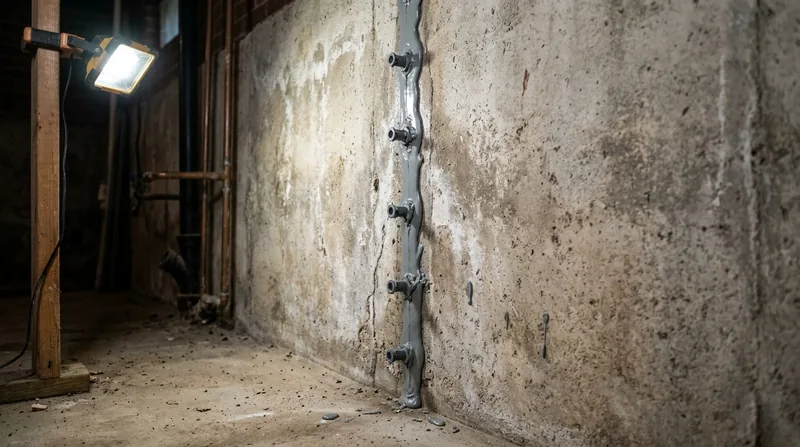
- We drill injection ports along the crack at the spacing the crack width requires.
- We flush the crack and seal the surface so injected material stays in the wall.
- We inject epoxy or polyurethane under pressure until the material reaches the far side.
- We remove the ports, finish the surface and verify the crack is filled.
- We flag any grading or downspout issue that would reopen the problem.
If the inspection shows hydrostatic pressure rather than a simple crack, we say so and explain the better answer, which is often an interior drain tile system that relieves the pressure instead of fighting it.
Key info: On a 1950s brick ranch in Meadowthorpe, the crack at the wall base was dry in summer and wet after every storm. Injection alone would have failed. We installed interior perimeter drain and a sump basin first, then injected the crack, and the wall stayed dry through the next spring.
Repair Methods We Match to Each Crack
No single method fits every crack, and the table below shows how we decide. Epoxy is rigid and strong, polyurethane stays flexible and foams into wet cracks, and structural options handle movement that injection cannot stop. We choose based on crack width, moisture and wall condition.
| Approach | Description | Best for |
|---|---|---|
| Epoxy injection | Rigid structural bond injected under pressure into dry cracks. | Non-structural shrinkage and cold-joint cracks in poured concrete. |
| Polyurethane injection | Flexible foam that expands and seals active leaks. | Wet, seeping cracks and hairline leaks in old brick or stone. |
| Carbon fiber straps | Straps bonded to the wall to resist inward movement. | Bowing walls with horizontal cracking. |
| Wall anchors | Anchors driven into stable soil to pull the wall back. | Walls moving inward from soil pressure. |
| Drainage correction | Grading, downspout extensions and footing drain work. | Cracks that reopen because water keeps loading the wall. |
When a wall is bowing rather than just cracked, the repair moves beyond injection, and our bowing wall repair service covers the structural side.
Foundation Crack Repair Cost in Lexington: What to Expect
Most single-crack injections in Lexington start at $450, and that figure covers a straightforward non-structural crack with good access. The price climbs with crack length, number of ports, wall material and whether the crack is active or dry. A crack in an old stone foundation in Woodland Park takes more prep than a clean shrinkage line in a Hamburg poured wall. Structural repairs and drainage corrections sit well above injection pricing because they involve more labor and materials.
Get two or three estimates and compare what each one includes, not just the bottom line. A low number that skips the inspection or the grading check often means the crack comes back. Our pricing page lays out the ranges so you can compare fairly.
Choosing a Foundation Crack Repair Contractor Near Me in Lexington
Ask for proof of licensing and insurance before anyone touches your foundation, and get a certificate sent to you, not just a verbal yes. Request references from jobs in neighborhoods like Chevy Chase or Beaumont with foundations similar to yours. Confirm who pulls the permit if structural work is involved, since rules vary by jurisdiction. If your home is in an HOA, check the rules on exterior work and equipment staging before the crew arrives.
Reach out through our contact page to schedule a look at your crack.
Foundation Crack Repair in Lexington: Pricing Guide
| Service | Price | Details |
|---|---|---|
| Single crack epoxy injection | Starting at $450 | One non-structural crack, standard access, ports and surface finish included. |
| Polyurethane injection (active leak) | Starting at $550 | Wet or seeping crack sealed with flexible foam, includes prep and cleanup. |
| Multiple cracks or long crack runs | Starting at $850 | Several cracks or extended runs priced by port count and wall material. |
| Structural repair (bowing or shifting wall) | On estimate | Carbon fiber straps or wall anchors require an on-site look before a number. |
| Travel | Included | In Lexington and surrounding areas, no separate call-out or mileage fee. |
| Estimate | Free | Response within 24h at (859) 710-8035, no obligation to book. |
Indicative pricing, the exact cost depends on square footage, finish, and site access. Free personalized estimate within 24h at (859) 710-8035.


