The Bluegrass Looks Flat, But the Ground Beneath Lexington Is Full of Holes
Homeowners in Lexington often look out at gentle rolling hills and assume the ground is solid and predictable. In reality, the Bluegrass region sits on a thick layer of limestone that has been slowly dissolved by groundwater for millions of years. That process creates karst geology: a landscape full of cracks, crevices, underground channels, and caves. When rain falls on your yard, it does not always soak in evenly. It finds the path of least resistance, and in Lexington limestone karst, that path often leads straight down and then sideways toward your foundation.
This is why two houses on the same street can have completely different basement experiences. One stays dry for decades while the neighbor pumps water out after every storm. The difference is usually not the house itself but what lies beneath it. Limestone dissolves unevenly, so the soil above it settles unevenly too. Understanding that reality is the first step toward protecting your home, and it is why local knowledge matters when you are dealing with Basement Waterproofing in this region.
How Sinkholes and Soil Movement Put Pressure on Your Foundation
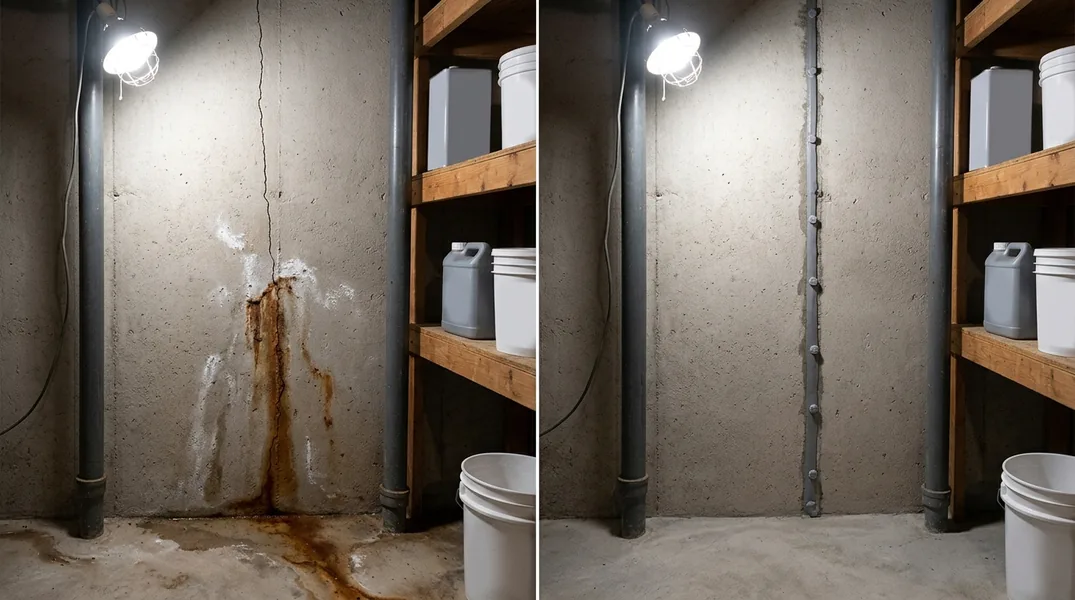
When limestone below the surface dissolves, it leaves voids. Soil above those voids gradually shifts downward, and that movement does not stay hidden. It shows up as cracks in basement walls, doors that suddenly stick, floors that feel uneven, and gaps around windows. Sinkholes foundation problems are not always dramatic collapses. More often they are slow, subtle shifts that open pathways for water. A hairline crack in a poured wall may be all it takes for groundwater to seep in during a heavy rain.
Soil movement foundation damage is especially common in areas where clay-rich topsoil sits over karst bedrock. Clay expands when wet and shrinks when dry, so the soil is constantly pushing and pulling against your foundation walls. Add the dissolving limestone below and you have a recipe for structural stress. Homeowners in Georgetown and Nicholasville see the same pattern because they share the same geology. If you notice new cracks or damp spots, it is worth having a professional look before the next rainy season makes things worse.
Springs and Seeps: When Water Comes Up Instead of Down
Bluegrass springs basement issues surprise a lot of homeowners because the water does not always come from above. In karst terrain, groundwater can travel through underground channels and emerge under or near a foundation. A spring that surfaces in your yard or a seep that appears along a basement wall is often connected to a much larger underground system. You cannot simply caulk it away. The water has to be managed and redirected.
This is where a proper Interior Drain Tile System earns its keep. It captures water at the point where it enters and moves it away from the living space. In some cases, Exterior Basement Waterproofing is also needed to relieve hydrostatic pressure against the walls. The right approach depends on whether the water is coming through the wall, up through the floor, or both. A local contractor who understands karst behavior can tell the difference and recommend a solution that actually solves the problem instead of just hiding it.
Basement Waterproofing Near Me: When to Call a Pro in Lexington
Some water issues are minor and seasonal. Others are signs of a larger problem that will not go away on its own. If you see efflorescence (the white powder on basement walls), musty odors, standing water after storms, or cracks that seem to grow, it is time to call. Waiting usually makes the repair more expensive because water damages insulation, drywall, flooring, and stored belongings while you delay. In Lexington, the combination of limestone karst and clay soil means small problems can escalate quickly after a wet spring.
A professional assessment should include more than a quick look at the basement. It should consider grading, downspouts, soil conditions, and the geology under the house. Foundation Waterproofing is not a one-size-fits-all product. It is a system designed around your specific site. If you are unsure where to start, reach out for a free estimate and ask questions about how the local soil and rock affect your home. A good contractor will welcome that conversation.
What Waterproofing Costs in Lexington and How to Plan for It
Homeowners often ask about pricing before anything else, and that is fair. Costs vary widely because every basement is different. A simple crack injection is far less expensive than a full interior drain tile installation, and exterior work adds another layer of cost and complexity. The geology of your specific lot matters too. A home sitting over a active karst channel may need more robust drainage than one on firmer ground. Rather than quoting a single number, a reputable company will assess your situation and explain the options at different price points.
It also helps to think about waterproofing as protection for your largest investment. Water damage repairs, mold remediation, and structural fixes often cost more than preventing the problem in the first place. If you are in Versailles or anywhere in the Bluegrass, ask for a written scope of work and a clear explanation of what is included. Then compare that to the cost of ignoring it. For most homeowners, the math favors dealing with it early. Call Lexington Waterproofing at (859) 710-8035 to talk through your situation and get a straightforward answer.
Looking for a professional basement waterproofing contractor in Lexington? Lexington Waterproofing responds fast for all your basement waterproofing needs.
Get a Free QuoteOur services: Basement Waterproofing · Interior Drain Tile System · Exterior Basement Waterproofing