Why Older Lexington Homes Are Prone to Foundation Problems
If you own an older home in Lexington, you already know that character comes with quirks. But some of those quirks are more than cosmetic. Many homes built before the 1950s sit on stone foundations, which were often laid with lime mortar rather than modern Portland cement. Over decades, that mortar softens and crumbles, especially when it stays damp. The result is a foundation that slowly loses its ability to hold back soil and water.
Lexington's clay-heavy soil makes things worse. Clay expands when wet and shrinks when dry, putting constant pressure on basement walls. Add in the freeze-thaw cycles of a Kentucky winter and the natural settling that any older home experiences, and you have a recipe for foundation problems signs that show up below grade long before they appear upstairs. Understanding what to look for in your basement or crawl space is the first step toward protecting your investment.
Basement Wall Cracks: Which Ones Matter Most
Not every crack is a crisis, but in an older home, basement wall cracks deserve a closer look. Hairline vertical cracks in poured concrete are often just shrinkage cracks and may be relatively harmless. However, horizontal cracks are a different story. They usually indicate that soil pressure is pushing the wall inward, and they often come with a Foundation Waterproofing concern that goes beyond simple seepage. Stair-step cracks in block or stone walls can also signal uneven settling or movement.
Pay attention to cracks that are wider than a quarter inch, that let in daylight, or that have dampness around them. In a stone foundation, look for cracks that follow the mortar joints and for areas where mortar is falling out when you touch it. These are classic signs that the foundation is struggling. If you see any of these, it is worth getting a professional opinion before the next rainy season. You can free estimate from a local expert to know exactly what you are dealing with.
Stone Foundations and Bowing Basement Walls: What to Watch For
Stone foundations are beautiful in a historic home, but they are also high-maintenance. Because they rely on mortar to hold irregular stones together, they are vulnerable to water infiltration and frost damage. Look for white, chalky deposits on the stone (efflorescence), which indicate water moving through the wall. Crumbling mortar, loose stones, and soft spots are all red flags. A bowing basement wall is another serious sign. If the wall leans inward or bulges, it means the structure is under stress and may need reinforcement or repair.
Bowing walls often develop in older homes where exterior drainage has failed or where gutters have been dumping water at the foundation for years. In Georgetown and Nicholasville, we see the same pattern: water saturates the clay soil, the soil expands, and the wall starts to move. If you notice a bowing wall, do not wait. It is a sign that the foundation needs attention now, not after the next storm.
Interior Clues: Floors, Doors, and Moisture
Foundation trouble does not always announce itself in the basement. Upstairs, you might notice doors that stick or no longer latch, floors that feel uneven or bouncy, or windows that are hard to open. These are often the first signs that the foundation has shifted. In older homes, a slight slope is common, but a sudden change is not. If you see gaps between the wall and ceiling or cracks in drywall above door frames, take note.
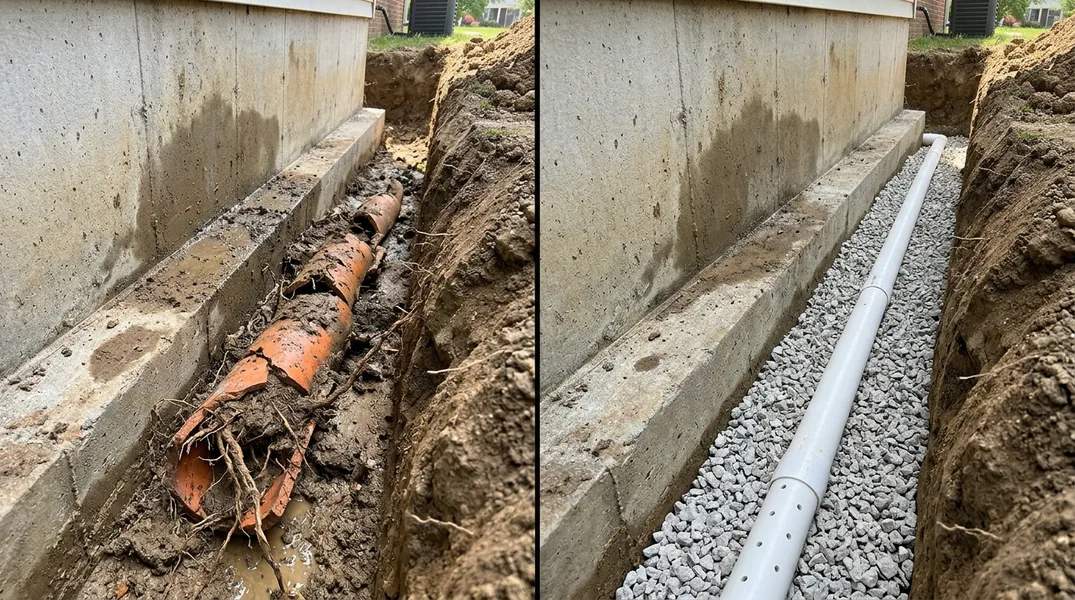
Moisture is another clue. Dampness, musty odors, and mold growth in the basement or crawl space can point to water entering through the foundation. That is where an Interior Drain Tile System can help by managing water before it reaches your living space. For homes in Versailles, where older farmhouses are common, these interior signs often show up alongside exterior ones. The key is to connect the dots early.
When to Call a Pro for Foundation Problems Near Me
If you have spotted any of these signs, it is time to bring in a professional. A local contractor can assess the foundation, identify the cause of the problem, and recommend the right solution. For some homes, Basement Waterproofing is enough to keep water out and stabilize the space. For others, Exterior Basement Waterproofing may be necessary to address the source of the water before it damages the foundation further. The right approach depends on the age of the home, the type of foundation, and the severity of the movement.
Do not wait for a small crack to become a big problem. Lexington Waterproofing serves homeowners across the area and can provide a clear assessment and honest recommendations. Call (859) 710-8035 to schedule a visit and get a free estimate. Protecting an older home starts with understanding what is happening below grade, and a professional evaluation is the best way to get peace of mind.
Looking for a professional basement waterproofing contractor in Lexington? Lexington Waterproofing responds fast for all your basement waterproofing needs.
Get a Free QuoteOur services: Basement Waterproofing · Interior Drain Tile System · Exterior Basement Waterproofing