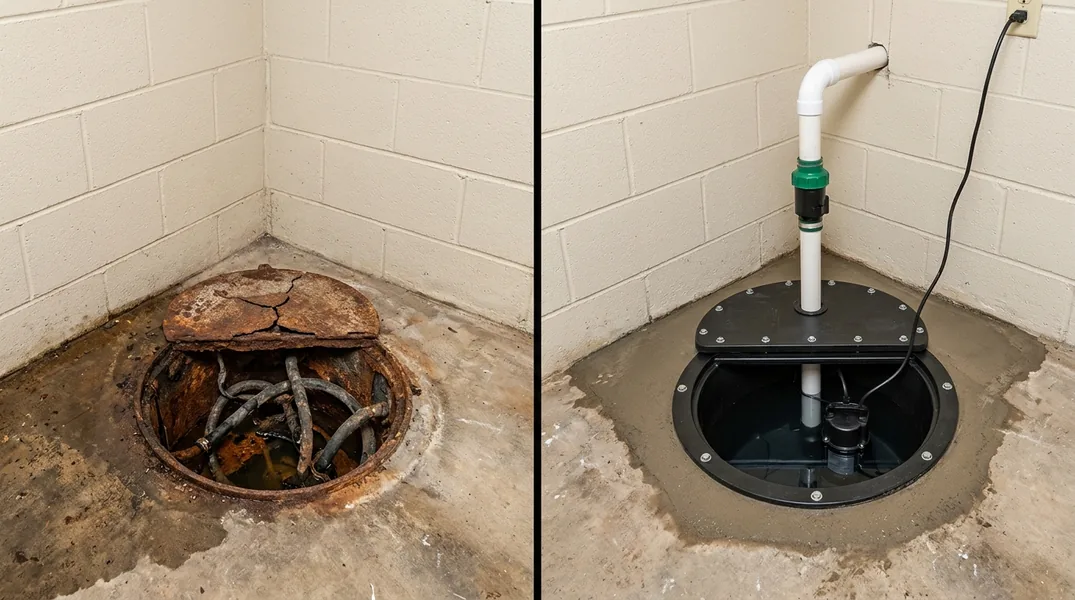
Why Spring Rain Puts Your Sump Pump to the Test in Lexington
Spring in Lexington brings longer days, greener lawns, and a lot of rain. The same clay-heavy soil that makes local gardens thrive also holds onto water, and that water has to go somewhere. For most homes with a basement or crawl space, the sump pump is the last line of defense. When it works, you never think about it. When it fails during a heavy storm, you can end up with inches of water in the basement before the rain even stops.
That is why the weeks before spring are the best time to give your pump a serious look. A sump pump that sat idle all winter can develop sticky switches, clogged intakes, or a check valve that no longer seals. None of those problems announce themselves until the pump is needed most. A little preventive maintenance now is far cheaper and easier than cleanup later. If you are not comfortable inspecting the system yourself, a professional Basement Waterproofing inspection can catch issues before the first big storm.
Sump Pump Maintenance Checklist for Homeowners
Start by unplugging the pump for safety, then remove the lid and look inside the pit. You should see a relatively clean basin, not a layer of mud, gravel, or debris. Reach in (with gloves) and clear anything that could block the intake. Next, check the float. Lift it by hand to confirm it moves freely and that the pump kicks on when the float rises. If the float sticks or the pump hums without pumping, you have a problem that needs attention before the rainy season.
Test the pump by pouring a bucket of water into the pit and watching how quickly it drains. A strong pump will clear several gallons in seconds. While you are there, inspect the discharge pipe for cracks or loose connections, and make sure the water is being routed well away from the foundation. Finally, check the check valve. This small fitting keeps water from flowing back into the pit after the pump shuts off. A failing sump pump check valve causes the pump to cycle repeatedly, which shortens its life and can leave standing water in the pit. If the valve is old, cracked, or leaking, replace it. It is an inexpensive part that prevents expensive problems.
Don't Skip the Battery Backup Sump Pump
Spring storms in central Kentucky often arrive with power outages. A primary pump that depends on household electricity is useless the moment the lights go out, and that is exactly when you need it most. A battery backup sump pump runs on a charged battery and takes over automatically when the main pump loses power or fails. It is one of the simplest upgrades a homeowner can make, and it turns a potential flooded basement into a minor inconvenience.
Maintaining the backup is just as important as maintaining the primary pump. Test the battery every few months, check the water level in flooded-cell batteries, and replace the battery every three to five years depending on the model. If you are unsure whether your current setup includes a backup, or if the battery has not been checked in years, it is worth a quick call to (859) 710-8035. A backup system paired with a properly maintained primary pump gives you two layers of protection against storm basement flooding.
When Sump Pump Maintenance Isn't Enough: Signs You Need More
Sometimes a well-maintained pump still cannot keep up. If your pump runs constantly during moderate rain, cycles on and off every few minutes, or leaves water in the pit after shutting off, the problem may be bigger than maintenance. It could be an undersized pump, a failing check valve, or a drainage system that is not directing water to the pit efficiently. In older Lexington homes, it is also common to find a pump installed without a proper liner or discharge route, which limits how well it can perform.
If you notice damp walls, efflorescence (the white powder on concrete), or a musty smell even when the pump is running, water is finding another path into the basement. In those cases, the right fix may involve an Interior Drain Tile System that collects water along the footing and feeds it to the sump pit, or Exterior Basement Waterproofing to address the source. A thorough Foundation Waterproofing evaluation can tell you which approach makes sense for your home. Homeowners in nearby Georgetown and Nicholasville face the same soil and storm patterns, so the advice applies across the region.
Sump Pump Maintenance Near Me: When to Call a Pro
Some maintenance tasks are genuinely DIY-friendly: clearing debris, testing the float, and pouring a bucket of water. Others are better left to a professional, especially if you are not sure what you are looking at. If your pump is more than seven to ten years old, if it has ever failed during a storm, or if you have never inspected the check valve or backup battery, a professional tune-up is a smart investment. A technician can test the pump under load, verify the discharge route, check the check valve, and confirm the backup system is ready.
It is also worth calling a pro if you are buying a home or have just moved into one. You inherit whatever sump setup the previous owner left behind, and it may not be sized correctly for your basement. Scheduling a free estimate before spring gives you a clear picture of what you have and what it needs. If you want to understand what different services typically run, our pricing page lays it out. For homeowners in Versailles and across the Bluegrass, getting ahead of the rain is always easier than cleaning up after it.
A Simple Spring Routine That Protects Your Basement
Put your sump pump on a seasonal calendar. In late winter or early spring, before the first heavy rain, run through the full checklist: clear the pit, test the float, pour water to confirm the pump moves it out quickly, inspect the discharge line, and verify the check valve is sealing. Test the backup battery and note its age so you know when to replace it. If anything looks off, address it immediately rather than waiting for the next storm to confirm the problem.
If you would rather have a trained eye handle it, Lexington Waterproofing serves homeowners throughout Lexington and can inspect your entire system, from the pit to the discharge point, and recommend repairs only where they are needed. Call (859) 710-8035 or request a free estimate to get on the schedule before the spring rains arrive. A few hours of preparation now can save you a weekend of cleanup later.
Looking for a professional basement waterproofing contractor in Lexington? Lexington Waterproofing responds fast for all your basement waterproofing needs.
Get a Free QuoteOur services: Basement Waterproofing · Interior Drain Tile System · Exterior Basement Waterproofing